ᱥᱮᱥᱚᱱ ᱨᱮᱭᱟᱜ ᱡᱮᱞᱮᱧ ᱟᱨ ᱠᱷᱚᱨᱚᱪ
ᱢᱤᱫ ᱵᱟᱡᱤ ᱴᱟᱠᱟ ᱨᱮ ᱠᱷᱮᱞ ᱯᱩᱸᱡᱤ ᱛᱤᱱᱟᱹᱜ ᱚᱠᱛᱚ ᱛᱟᱦᱮᱸᱱᱟ, ᱟᱨ ᱜᱷᱟᱸᱴᱟ ᱠᱚ ᱨᱮᱭᱟᱜ ᱠᱷᱚᱨᱚᱪ ᱛᱤᱱᱟᱹᱜ᱾ ᱡᱟᱹᱥᱛᱤ ᱠᱷᱮᱞᱚᱸᱰ ᱠᱚ ᱡᱟᱦᱟᱸ ᱮᱞ ᱵᱟᱝ ᱠᱚ ᱦᱤᱥᱟᱹᱵ ᱞᱮᱫᱟ, ᱢᱮᱱᱠᱷᱟᱱ ᱡᱟᱹᱥᱛᱤ ᱠᱚ ᱦᱤᱥᱟᱹᱵ ᱞᱟᱹᱠᱛᱤᱭᱟ᱾
ᱢᱤᱫ ᱞᱮᱠᱟᱱ ᱥᱚᱢᱟᱱ ᱴᱟᱠᱟ ᱵᱟᱡᱤ ᱫᱚ, ᱟᱣᱥᱚᱛ ᱛᱮ, ᱠᱷᱮᱞ ᱯᱩᱸᱡᱤ ᱨᱮᱭᱟᱜ ᱡᱚᱛᱚ ᱵᱟᱡᱤ ᱴᱟᱠᱟ ᱞᱟᱹᱜᱤᱫ 37 ᱜᱷᱩᱨᱟᱹᱣ ᱛᱟᱦᱮᱸᱱᱟ, ᱡᱩᱫᱤ ᱦᱚᱸ ᱥᱟᱱᱟᱢ ᱥᱮᱥᱚᱱ ᱨᱮᱭᱟᱜ ᱟᱫᱷᱟ ᱫᱚ ᱚᱱᱟ ᱠᱷᱚᱱ ᱞᱟᱦᱟ ᱨᱮ ᱢᱩᱪᱟᱹᱫᱚᱜ-ᱟ; ᱢᱤᱫ ᱜᱷᱟᱸᱴᱟ ᱨᱮᱭᱟᱜ ᱟᱸᱫᱟᱡᱽ ᱠᱷᱚᱨᱚᱪ ᱫᱚ ᱵᱟᱡᱤ ᱴᱟᱠᱟ × ᱢᱤᱫ ᱜᱷᱟᱸᱴᱟ ᱨᱮᱭᱟᱜ ᱜᱷᱩᱨᱟᱹᱣ / 37᱾ ᱵᱟᱨᱭᱟ ᱥᱟᱶ ᱟᱯᱮ ᱢᱤᱫ ᱧᱤᱫᱟᱹ ᱮᱦᱚᱵ ᱞᱟᱦᱟ ᱨᱮ ᱜᱮ ᱚᱱᱟ ᱨᱮᱭᱟᱜ ᱫᱟᱢ ᱵᱟᱰᱟᱭ ᱫᱟᱲᱮᱭᱟᱜ-ᱟ ᱯᱮ᱾
ᱠᱷᱮᱞ ᱯᱩᱸᱡᱤ ᱛᱤᱱᱟᱹᱜ ᱚᱠᱛᱚ ᱛᱟᱦᱮᱸᱱᱟ
Assume standard single-zeroᱪᱟᱠᱟᱡᱤᱨᱚᱢᱤᱫᱜᱮ ᱦᱟᱹᱨᱭᱟᱹᱲ ᱠᱷᱟᱱᱟ ᱡᱟᱦᱟᱸ ᱥᱚᱢᱟᱱ ᱴᱟᱠᱟ, ᱰᱚᱡᱮᱱ ᱟᱨᱵᱟᱝ ᱠᱚᱞᱚᱢ ᱵᱟᱡᱤ ᱵᱟᱭ ᱠᱚᱵᱷᱟᱨᱟ; ᱠᱮᱥᱤᱱᱳ ᱵᱟᱲᱛᱤ ᱨᱮᱭᱟᱜ ᱢᱩᱞ᱾ ᱮᱴᱟᱜ ᱧᱩᱛᱩᱢ: ᱥᱤᱝᱜᱚᱞ ᱡᱤᱨᱚ, 0᱾ᱯᱩᱨᱟᱹ ᱯᱟᱲᱦᱟᱣ → rules, independent spinsᱜᱚᱱᱤᱛᱟᱡᱟᱫ ᱜᱷᱩᱨᱟᱹᱣᱢᱟᱨᱮ ᱪᱮᱫ ᱦᱚᱸ ᱦᱩᱭ ᱠᱷᱟᱱ ᱦᱚᱸ ᱡᱚᱛᱚ ᱜᱷᱩᱨᱟᱹᱣ ᱨᱮ ᱥᱚᱢᱵᱷᱟᱵᱱᱟ ᱢᱤᱫ ᱞᱮᱠᱟ ᱜᱮ᱾ ᱱᱚᱶᱟ ᱥᱟᱭᱤᱴ ᱨᱮᱭᱟᱜ ᱡᱚᱛᱚ ᱦᱤᱥᱟᱹᱵ ᱨᱮᱭᱟᱜ ᱵᱮᱥ᱾ᱯᱩᱨᱟᱹ ᱯᱟᱲᱦᱟᱣ →, a fixed stake s, a bankrollᱴᱟᱠᱟᱠᱷᱮᱞ ᱯᱩᱸᱡᱤᱠᱷᱮᱞ ᱞᱟᱹᱜᱤᱫ ᱟᱞᱟᱜ ᱫᱚᱦᱚ ᱟᱠᱟᱱ ᱡᱚᱛᱚ ᱴᱟᱠᱟ᱾ ᱠᱷᱮᱞ ᱯᱩᱸᱡᱤ ᱥᱟᱢᱵᱷᱟᱞ ᱫᱚ ᱢᱮᱱᱮᱛ ᱢᱤᱫ ᱵᱟᱡᱤ ᱟᱨ ᱢᱤᱫ ᱥᱮᱥᱚᱱ ᱨᱮ ᱚᱱᱟ ᱠᱷᱚᱱ ᱛᱤᱱᱟᱹᱜ ᱡᱚᱠᱷᱤᱢ ᱨᱮ ᱫᱚᱦᱚᱭ ᱚᱱᱟ ᱴᱷᱟᱹᱣᱠᱟᱹ᱾ᱯᱩᱨᱟᱹ ᱯᱟᱲᱦᱟᱣ → B that is an integer multiple of s, and play continuing until the balance reaches zero. With these assumptions, the bankroll drifts down by s/37 a spin on average and swings by about s a spin either way. The drift alone sets the average: the bankroll lasts 37 × B/s spins, since that is how long it takes to lose B at s/37 a spin. The swings make the lengths uneven. Some sessions die early on a bad run, a few last far longer, and the median, the length half of all sessions fail to reach, sits below the average. A $500 bankroll at $10 (B/s = 50) lasts 1,850 spins on average and 1,364 at the median, about 27 hours at an illustrative 50 spins per hour. At $50 (B/s = 10) the median is 136 spins, under three hours.
ᱜᱷᱟᱸᱴᱟ ᱠᱚ ᱨᱮᱭᱟᱜ ᱠᱷᱚᱨᱚᱪ
Expected lossᱜᱚᱱᱤᱛᱟᱸᱫᱟᱡᱽ ᱦᱟᱹᱱᱤᱟᱸᱫᱟᱡᱽ ᱜᱚᱱᱚᱝ ᱜᱩᱬ ᱡᱚᱛᱚ ᱵᱟᱡᱤ ᱴᱟᱠᱟ; ᱢᱤᱫ ᱥᱮᱥᱚᱱ ᱟᱨᱵᱟᱝ ᱚᱠᱛᱚ ᱨᱮ ᱟᱣᱥᱚᱛ ᱛᱮ ᱦᱟᱨᱟᱣᱚᱜ ᱴᱟᱠᱟ᱾ᱯᱩᱨᱟᱹ ᱯᱟᱲᱦᱟᱣ → per hour = stake × spins per hour / 37. The two numbers you control are the stake and the pace. If all planned spins are played, $10 standard single-zero bets at 50 spins per hour have an expected hourly loss of $13.51. La partageᱱᱤᱭᱚᱢᱞᱟ ᱯᱟᱨᱛᱟᱡᱽᱯᱷᱨᱮᱧᱪ ᱱᱤᱭᱚᱢ: ᱡᱤᱨᱚ ᱦᱤᱡᱩᱜ ᱞᱮᱠᱷᱟᱱ ᱥᱚᱢᱟᱱ ᱴᱟᱠᱟ ᱵᱟᱡᱤ ᱨᱮᱭᱟᱜ ᱟᱫᱷᱟ ᱨᱩᱣᱟᱹᱲᱚᱜ-ᱟ᱾ ᱚᱱᱟ ᱵᱟᱡᱤ ᱠᱚ ᱨᱮ ᱠᱮᱥᱤᱱᱳ ᱵᱟᱲᱛᱤ ᱟᱫᱷᱟ, 1.35% ᱦᱩᱭᱩᱜ-ᱟ᱾ᱯᱩᱨᱟᱹ ᱯᱟᱲᱦᱟᱣ → on eligible even-money betsᱵᱟᱡᱤᱥᱚᱢᱟᱱ ᱴᱟᱠᱟ ᱵᱟᱡᱤᱟᱨᱟᱜ/ᱦᱮᱸᱫᱮ, ᱵᱤᱡᱳᱲ/ᱡᱳᱲ, ᱢᱟᱨᱟᱝ/ᱦᱩᱰᱤᱧ᱾ 18 ᱮᱞ, ᱵᱷᱩᱜᱛᱟᱱ 1:1᱾ᱯᱩᱨᱟᱹ ᱯᱟᱲᱦᱟᱣ → reduces that to $6.76. Doubling the pace to 100 spins per hour doubles the standard expected loss to $27.03. These are averages, not hourly fees or loss limits.
ᱵᱟᱨᱭᱟ ᱥᱟᱶ ᱥᱟᱶ
Consider $500 for up to 200 standard single-zero redᱵᱟᱡᱤᱟᱨᱟᱜ18 ᱟᱨᱟᱜ ᱮᱞ ᱨᱮ ᱥᱚᱢᱟᱱ ᱴᱟᱠᱟ ᱵᱟᱡᱤ᱾ ᱯᱷᱨᱮᱧᱪ ᱨᱮ: ᱨᱩᱡᱽ᱾ᱯᱩᱨᱟᱹ ᱯᱟᱲᱦᱟᱣ → bets. At a fixed $25 stake, the chance of reaching zero within those spins is about 25.9%. A median ruin time of 394 spins therefore does not make a 200-spin session safe. If play stops at ruin or after 200 spins, expected turnoverᱴᱟᱠᱟᱡᱚᱛᱚ ᱵᱟᱡᱤ ᱦᱤᱥᱟᱹᱵᱢᱤᱫ ᱥᱮᱥᱚᱱ ᱟᱨᱵᱟᱝ ᱚᱠᱛᱚ ᱨᱮ ᱡᱚᱛᱚ ᱵᱟᱡᱤ ᱴᱟᱠᱟ, ᱫᱚᱦᱲᱟ ᱞᱟᱜᱟᱣ ᱡᱤᱛ ᱴᱟᱠᱟ ᱥᱮᱞᱮᱫ᱾ ᱮᱴᱟᱜ ᱧᱩᱛᱩᱢ: ᱦᱮᱱᱰᱮᱞ, ᱮᱠᱥᱚᱱ᱾ᱯᱩᱨᱟᱹ ᱯᱟᱲᱦᱟᱣ → gives an expected loss of about $122.52; $135.14 is the figure assuming all 200 bets are made. At a $10 stake, the ruin probabilityᱜᱚᱱᱤᱛᱥᱚᱢᱵᱷᱟᱵᱱᱟᱢᱤᱫ ᱨᱮᱡᱟᱞᱴ ᱨᱮᱭᱟᱜ ᱥᱚᱢᱵᱷᱟᱵᱱᱟ, 0 ᱠᱷᱚᱱ 1 ᱟᱨᱵᱟᱝ 0% ᱠᱷᱚᱱ 100%᱾ ᱢᱤᱫ ᱮᱞ: 1/37 = 2.70%᱾ᱯᱩᱨᱟᱹ ᱯᱟᱲᱦᱟᱣ → falls to about 0.143%, with an expected loss of about $54.05. Choose stakes within a loss budget; none of these figures guarantees survival.
- p10 −$500
- p25 −$500
- ᱢᱤᱰᱤᱭᱟᱱ −$500
- p75 −$50
- p90 +$350
ᱥᱴᱨᱮᱴ ᱚᱯ ᱥᱮᱥᱚᱱ
A straight-up bet has much greater variability per unitᱴᱟᱠᱟᱭᱩᱱᱤᱴᱢᱤᱫ ᱥᱤᱥᱴᱮᱢ ᱟᱨᱵᱟᱝ ᱠᱷᱮᱞᱚᱸᱰ ᱵᱮᱵᱷᱟᱨ ᱵᱮᱥ ᱵᱟᱡᱤ ᱴᱟᱠᱟ᱾ ᱯᱨᱚᱜᱽᱨᱮᱥᱚᱱ ᱠᱚ ᱭᱩᱱᱤᱴ ᱛᱮ ᱵᱩᱡᱷᱟᱹᱣᱚᱜ-ᱟ ᱡᱮᱢᱚᱱ ᱡᱟᱦᱟᱸᱱ ᱴᱮᱵᱩᱞ ᱨᱮ ᱞᱟᱹᱜᱩ ᱦᱩᱭᱩᱜ-ᱟ᱾ᱯᱩᱨᱟᱹ ᱯᱟᱲᱦᱟᱣ → staked than red: standard deviationᱜᱚᱱᱤᱛᱥᱴᱮᱱᱰᱟᱨᱰ ᱰᱤᱵᱷᱤᱭᱮᱥᱚᱱᱣᱮᱨᱤᱭᱮᱱᱥ ᱨᱮᱭᱟᱜ ᱵᱚᱜᱚ ᱢᱩᱞ; ᱟᱸᱫᱟᱡᱽ ᱜᱚᱱᱚᱝ ᱠᱷᱚᱱ ᱨᱮᱡᱟᱞᱴ ᱨᱮᱭᱟᱜ ᱥᱟᱫᱷᱟᱨᱚᱱ ᱥᱟᱦᱟ᱾ᱯᱩᱨᱟᱹ ᱯᱟᱲᱦᱟᱣ → about 5.84 units versus 1. Over a 200-spin single-zero session, a bankroll of 13 fixed red stakes has about a 49.1% chance of ruin. For one straight-up number, 56 stakes gives about 52.7% ruin and 57 stakes about 47.5%. These comparisons depend on the horizon and bet; there is no universal four-times-bankroll rule. With only 20 straight-up stakes, the first 20 spins all miss about 57.8% of the time, ending the session immediately.
ᱥᱟᱹᱨᱤ ᱫᱟᱢ ᱛᱟᱹᱞᱤᱠᱟᱹ
ᱨᱩᱞᱮᱴ ᱨᱮᱭᱟᱜ ᱠᱷᱚᱨᱚᱪ ᱫᱚ ᱵᱟᱡᱤ ᱴᱟᱠᱟ × ᱜᱷᱩᱨᱟᱹᱣ / 37᱾ ᱮᱴᱟᱜ ᱡᱚᱛᱚ, ᱥᱤᱥᱴᱮᱢ, ᱵᱷᱟᱜᱚ ᱮᱞ, ᱦᱮᱡᱤᱝ, ᱫᱚ ᱧᱤᱫᱟᱹ ᱨᱮᱭᱟᱜ ᱨᱩᱯ ᱜᱮ ᱴᱷᱟᱹᱣᱠᱟᱹᱣᱟ, ᱫᱟᱢ ᱫᱚ ᱵᱟᱝ᱾ ᱡᱟᱦᱟᱸ ᱠᱷᱮᱞᱚᱸᱰ ᱮᱦᱚᱵ ᱨᱮ ᱫᱟᱢ ᱮ ᱦᱤᱥᱟᱹᱵᱟ ᱟᱨ ᱡᱟᱦᱟᱸ ᱵᱟᱡᱤ ᱴᱟᱠᱟ ᱮᱢ ᱨᱮ ᱟᱡ ᱠᱩᱥᱤ ᱚᱱᱟ ᱮ ᱵᱟᱪᱷᱟᱣᱟ, ᱩᱱᱤ ᱫᱚ ᱥᱴᱨᱮᱴᱮᱡᱤ ᱨᱮᱭᱟᱜ ᱚᱱᱟ ᱢᱤᱫ ᱦᱟᱹᱴᱤᱧ ᱠᱟᱹᱢᱤ ᱮ ᱠᱟᱹᱢᱤ ᱟᱠᱟᱫᱟ ᱡᱟᱦᱟᱸ ᱫᱚ ᱥᱟᱹᱨᱤ ᱛᱮ ᱠᱟᱹᱢᱤᱭᱟ᱾
ᱯᱷᱚᱨᱢᱩᱞᱟ
ᱠᱩᱠᱞᱤ ᱠᱚ
ᱴᱷᱤᱠ ᱯᱷᱚᱨᱢᱩᱞᱟ ᱫᱚ ᱵᱟᱹᱱᱩᱜ-ᱟ᱾ ᱦᱩᱰᱤᱧ ᱯᱩᱸᱡᱤ ᱨᱮ ᱪᱮᱛᱟᱱ-ᱞᱟᱛᱟᱨ ᱜᱮ ᱢᱟᱨᱟᱝ ᱟᱨ ᱢᱤᱰᱤᱭᱟᱱ ᱫᱚ ᱠᱚᱢ ᱵᱮᱥᱤ (B/s)² ᱞᱮᱠᱟ ᱵᱟᱹᱲᱛᱤᱭᱚᱜ-ᱟ, ᱱᱤᱭᱟᱭ ᱥᱤᱠᱟᱹ ᱞᱮᱠᱟ᱾ ᱢᱟᱨᱟᱝ ᱯᱩᱸᱡᱤ ᱨᱮ ᱠᱮᱥᱤᱱᱳ ᱵᱟᱲᱛᱤ ᱜᱮ ᱢᱟᱨᱟᱝ ᱟᱨ ᱢᱤᱰᱤᱭᱟᱱ ᱫᱚ ᱟᱣᱥᱚᱛ, 37 × B/s, ᱥᱮᱫ ᱥᱮᱴᱮᱨᱚᱜ-ᱟ᱾ ᱠᱚᱢ ᱵᱮᱥᱤ 20 ᱵᱟᱡᱤ ᱴᱟᱠᱟ ᱨᱮ (B/s)² ᱱᱤᱭᱚᱢ ᱫᱚ ᱴᱷᱤᱠ ᱢᱤᱰᱤᱭᱟᱱ, 394 ᱜᱷᱩᱨᱟᱹᱣ ᱥᱟᱶ ᱢᱤᱞᱟᱹᱣᱚᱜ-ᱟ; ᱚᱱᱟ ᱠᱷᱚᱱ ᱞᱟᱛᱟᱨ ᱨᱮ ᱠᱚᱢ ᱟᱨ ᱪᱮᱛᱟᱱ ᱨᱮ ᱵᱮᱥᱤ ᱦᱩᱭᱩᱜ-ᱟ᱾
Stopping reduces expected turnover and therefore expected loss. A stated stop-lossᱥᱴᱨᱮᱴᱮᱡᱤᱦᱟᱹᱱᱤ ᱥᱤᱢᱟᱹᱞᱟᱦᱟ ᱠᱷᱚᱱ ᱛᱷᱤᱠ ᱟᱠᱟᱱ ᱦᱟᱹᱱᱤ, ᱡᱟᱦᱟᱸ ᱨᱮ ᱥᱮᱴᱮᱨ ᱞᱮᱠᱷᱟᱱ ᱟᱯᱮ ᱥᱮᱥᱚᱱ ᱵᱚᱸᱫ ᱯᱮ᱾ᱯᱩᱨᱟᱹ ᱯᱟᱲᱦᱟᱣ → can be exceeded by the final losing bet unless the remaining allowance limits that stake. It does not improve the odds of the bets already placed.
La partage halves expected loss per eligible even-money bet. Dividing bankroll by the mean loss per full stake suggests 74 × B/s spins, but this is not an exact session-length formula: half-losses can leave less than a full stake, and table minimums or smaller final bets change the stopping process.
ᱜᱚᱱᱤᱛ ᱥᱟᱶ ᱨᱟᱹᱥᱠᱟᱹ
ᱱᱚᱶᱟ ᱠᱚ ᱯᱩᱭᱞᱩ ᱟᱯᱮ ᱛᱮ ᱠᱩᱨᱩᱢᱩᱴᱩ ᱯᱮ᱾ ᱢᱤᱫ ᱢᱤᱫ ᱥᱚᱢᱟᱫᱷᱟᱱ ᱫᱚ ᱩᱠᱩ ᱢᱮᱱᱟᱜ-ᱟ; ᱛᱮᱭᱟᱨ ᱦᱩᱭ ᱠᱟᱛᱮ ᱡᱷᱤᱡᱽ ᱯᱮ᱾
Start with $500 and bet $10 on redᱵᱟᱡᱤᱟᱨᱟᱜ18 ᱟᱨᱟᱜ ᱮᱞ ᱨᱮ ᱥᱚᱢᱟᱱ ᱴᱟᱠᱟ ᱵᱟᱡᱤ᱾ ᱯᱷᱨᱮᱧᱪ ᱨᱮ: ᱨᱩᱡᱽ᱾ᱯᱩᱨᱟᱹ ᱯᱟᱲᱦᱟᱣ → on each independent, uniform single-zeroᱪᱟᱠᱟᱡᱤᱨᱚᱢᱤᱫᱜᱮ ᱦᱟᱹᱨᱭᱟᱹᱲ ᱠᱷᱟᱱᱟ ᱡᱟᱦᱟᱸ ᱥᱚᱢᱟᱱ ᱴᱟᱠᱟ, ᱰᱚᱡᱮᱱ ᱟᱨᱵᱟᱝ ᱠᱚᱞᱚᱢ ᱵᱟᱡᱤ ᱵᱟᱭ ᱠᱚᱵᱷᱟᱨᱟ; ᱠᱮᱥᱤᱱᱳ ᱵᱟᱲᱛᱤ ᱨᱮᱭᱟᱜ ᱢᱩᱞ᱾ ᱮᱴᱟᱜ ᱧᱩᱛᱩᱢ: ᱥᱤᱝᱜᱚᱞ ᱡᱤᱨᱚ, 0᱾ᱯᱩᱨᱟᱹ ᱯᱟᱲᱦᱟᱣ → spin. Stop only when the bankrollᱴᱟᱠᱟᱠᱷᱮᱞ ᱯᱩᱸᱡᱤᱠᱷᱮᱞ ᱞᱟᱹᱜᱤᱫ ᱟᱞᱟᱜ ᱫᱚᱦᱚ ᱟᱠᱟᱱ ᱡᱚᱛᱚ ᱴᱟᱠᱟ᱾ ᱠᱷᱮᱞ ᱯᱩᱸᱡᱤ ᱥᱟᱢᱵᱷᱟᱞ ᱫᱚ ᱢᱮᱱᱮᱛ ᱢᱤᱫ ᱵᱟᱡᱤ ᱟᱨ ᱢᱤᱫ ᱥᱮᱥᱚᱱ ᱨᱮ ᱚᱱᱟ ᱠᱷᱚᱱ ᱛᱤᱱᱟᱹᱜ ᱡᱚᱠᱷᱤᱢ ᱨᱮ ᱫᱚᱦᱚᱭ ᱚᱱᱟ ᱴᱷᱟᱹᱣᱠᱟᱹ᱾ᱯᱩᱨᱟᱹ ᱯᱟᱲᱦᱟᱣ → reaches zero, with no upper target and a bank that can always pay. How many spins does the bankroll last on average?
ᱥᱚᱢᱟᱫᱷᱟᱱ ᱩᱫᱩᱜ
ᱛᱮᱞᱟ 1,850 ᱜᱷᱩᱨᱟᱹᱣ: 50 ᱵᱟᱡᱤ ᱴᱟᱠᱟ ᱨᱮᱭᱟᱜ ᱡᱚᱛᱚ ᱞᱟᱹᱜᱤᱫ 37 ᱜᱷᱩᱨᱟᱹᱣ᱾
Each spin costs, on average, 1/37 of the stake: $10/37, about 27 cents. The bankroll holds 50 stakes, and losing 50 stakes at 1/37 of a stake a spin takes 50 × 37 = 1,850 spins.
The swings do not change this average, because a session can only end at zero and every spin before that costs the same 27 cents on average. They change the spread: half of all sessions are over by spin 1,364, and about one in twenty runs past 5,000, which pulls the average up.
For this fixed-stake even-money random walk, with no upper boundary, the mean time to zero is the initial number of stakes divided by the house edgeᱜᱚᱱᱤᱛᱠᱮᱥᱤᱱᱳ ᱵᱟᱲᱛᱤᱡᱚᱛᱚ ᱵᱟᱡᱤ ᱴᱟᱠᱟ ᱠᱷᱚᱱ ᱠᱮᱥᱤᱱᱳ ᱟᱣᱥᱚᱛ ᱛᱮ ᱫᱚᱦᱚᱭ ᱦᱟᱹᱴᱤᱧ: ᱭᱩᱨᱚᱯᱤᱭᱟᱱ ᱨᱩᱞᱮᱴ ᱨᱮ 2.70%᱾ᱯᱩᱨᱟᱹ ᱯᱟᱲᱦᱟᱣ →. On a standard double-zero wheel the same $500 bankroll at $10 per spin therefore lasts 50 ÷ (2/38) = 950 spins on average. A time limit, profit target or changing stakes defines a different stopping problem.
ᱞᱟᱸᱫᱟ ᱞᱟᱹᱜᱤᱫ ᱠᱚᱢᱤᱠ
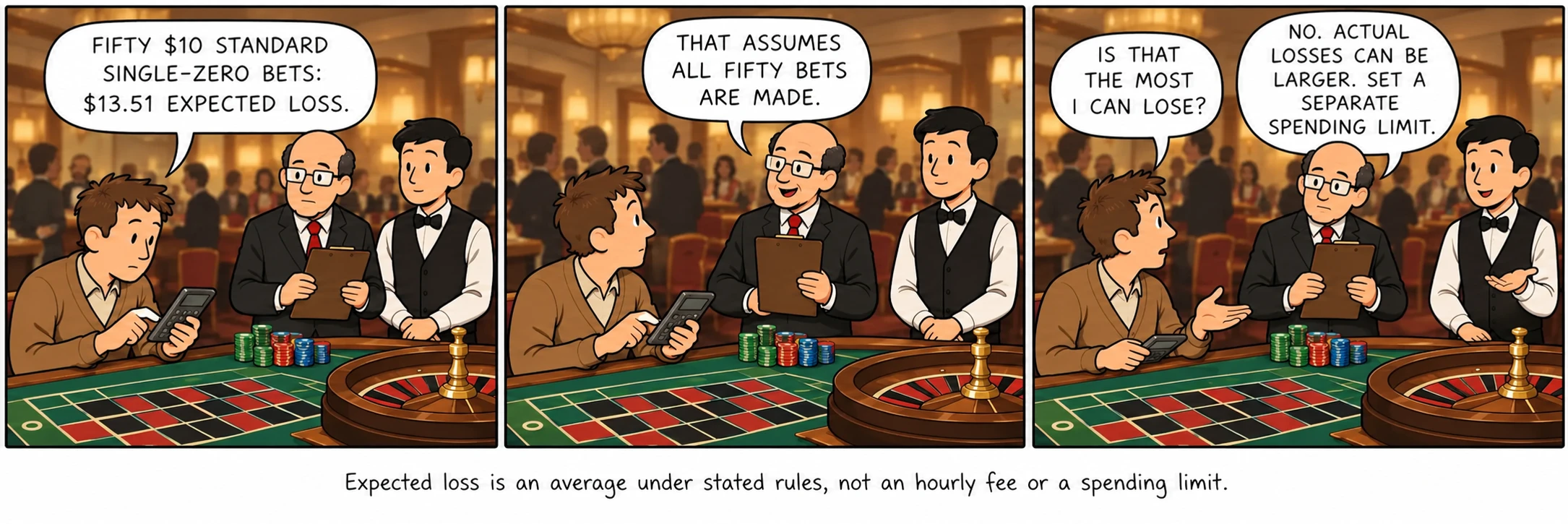
ᱵᱟᱡᱤ ᱴᱟᱠᱟ × ᱜᱷᱩᱨᱟᱹᱣ / 37᱾ ᱧᱤᱫᱟᱹ ᱮᱦᱚᱵ ᱞᱟᱦᱟ ᱨᱮ ᱜᱮ ᱚᱱᱟ ᱨᱮᱭᱟᱜ ᱫᱟᱢ ᱦᱤᱥᱟᱹᱵ ᱯᱮ᱾
ᱯᱷᱮᱰᱟᱛ
- Feller, W. An Introduction to Probability Theory and Its Applications, Vol. 1.
- Ethier, S. N. The Doctrine of Chances: Probabilistic Aspects of Gambling.
- Epstein, R. A. The Theory of Gambling and Statistical Logic, 2nd ed.